
Inflatable tents replace many of the usual tent poles with strong air-filled tubes. You use a pump to fill the tubes. As they fill, the tent rises into shape. This can make camp setup quick and simple.
Air tents can be a good fit for car camping and family trips. They are not perfect for every camper. They can cost more, weigh more, and still need stakes and guy lines. The best choice depends on where you camp and how you travel.
How Inflatable Tents Work
An inflatable tent uses sealed air beams in place of some or all rigid poles. A hand pump or electric pump fills each beam to the pressure set by the maker. The firm beams then support the tent body.
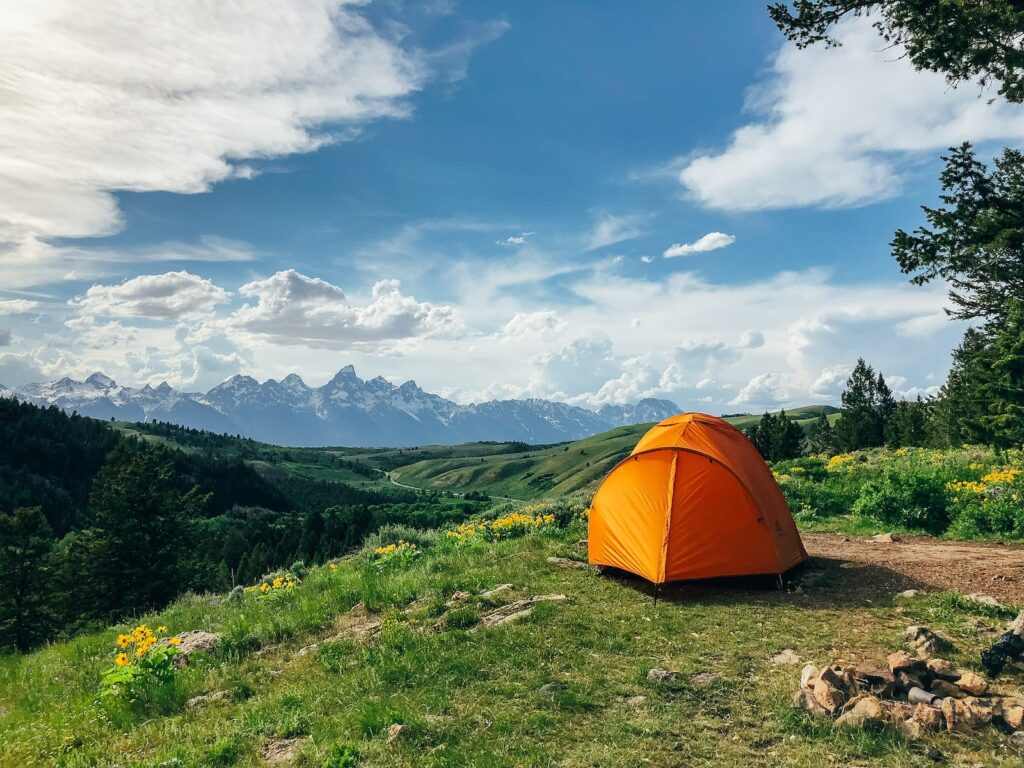
You still need to stake the tent well. Guy lines also matter when wind picks up. If you are new to simple campsites, our guide to primitive camping explains how shelter fits into a basic camp plan.
Why Campers Like Air Tents
- Fast setup: There are fewer rigid poles to sort and connect.
- Simple pitching: Large family tents can be easier for one or two people to raise.
- Flexible beams: Air beams can flex in wind instead of bending like some metal poles.
- Comfort: Many air tents are made for roomy car-camping layouts.
That easy setup is useful when you reach camp late or have children waiting to settle in. It also leaves more time for cooking, hiking, or fishing.
The Downsides to Know
Air tents have tradeoffs. Many models are heavy and bulky when packed. That makes them better for a vehicle-based trip than a long walk into the backcountry. If you plan to carry everything yourself, compare the tent with the lighter gear needs in our backcountry camping guide.
Price can also be higher than a basic pole tent. You need a pump, and a damaged valve or air beam can cause trouble. A small inflatable tent repair kit is worth keeping with the tent. Check that the patch material works with your model.
How to Set Up an Inflatable Tent
Pick a flat spot that is not in a low place where rain can pool. Look up for dead limbs. Clear sharp sticks and rocks from the tent area. The National Park Service campsite guide also recommends checking for hazards such as wind, lightning, flooding, and dead branches before you pitch a tent.
- Spread out the tent and place the floor where you want it.
- Stake the main corners as the maker directs.
- Connect the pump to the correct valve.
- Inflate each beam only to the listed pressure.
- Stake the remaining points and tension the guy lines.
A pump with a pressure gauge makes this job easier. If your tent supports it, a suitable air tent pump with a gauge can help you stop at the right pressure. Always follow the pressure limit in your tent manual.
Weather Still Matters
An air tent is still a tent. It is not a storm shelter. Check the forecast before you leave and again while you are at camp. Leave exposed areas when severe weather is near. Use a safe building or hard-topped vehicle for lightning shelter.
Wind ratings and setup rules vary by model. Use every required stake and guy line. Do not assume a flexible air beam makes a poorly anchored tent safe in strong wind.
Care and Repairs
Dry the tent before long-term storage. Dirt and moisture can shorten its life. Check valves, seams, beam sleeves, stakes, and guy lines before each trip. Practice a small repair at home so you know how the kit works.
Good gear does not need to be thrown away just because your camping style changes. If you replace an old shelter that is still safe and usable, our guide to donating used camping gear has ideas for giving it a second life.
Water and Camp Comfort
A roomy tent is only one part of a comfortable camp. Safe drinking water matters more. If you camp away from treated water, this practical guide to camping water filters and purifiers explains filters, boiling, treatment tablets, and simple backup plans.
Are Inflatable Tents Worth It?
For car campers and families, an inflatable tent can be a very handy shelter. Setup is simple, and many models give you lots of living space. The extra weight matters less when the tent rides in your vehicle.
Backpackers may be happier with a lighter pole tent. Budget campers may also get more value from a basic model. If fast setup and roomy camp living matter most, though, an air tent is worth a close look.