
A ductless mini-split can make a cabin, workshop, garage, or small home much easier to heat and cool. The Friedrich J Series 12,000 BTU wall-mounted heat pump was built for that kind of job. It pairs an indoor wall unit with an outdoor compressor, so you do not need large ducts running through the building.
This is an older Friedrich line, so I would not shop by the name alone. The exact model number matters. Specs changed during the J Series run. If you find a used unit or old stock, check the model plate and matching indoor and outdoor units before you buy parts or plan an install.
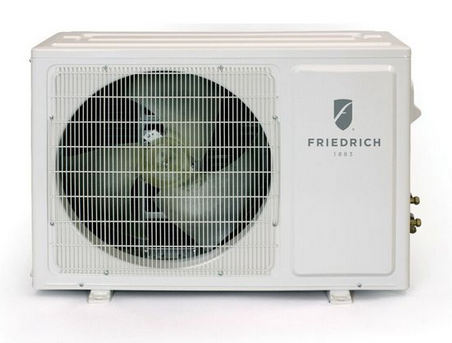
What the Friedrich J Series Is
The J Series was Friedrich’s ductless wall-mounted heat-pump family. A heat pump does not make heat the same way a space heater does. It moves heat. In summer, it moves heat outdoors. In winter, it pulls usable heat from outdoor air and moves it inside.
That basic design can work well in a small cabin or other space without ducts. The U.S. Department of Energy explains that ductless air-source heat pumps can be an efficient and flexible choice for buildings that do not have existing ductwork.
The 12,000 BTU J Series Models
Friedrich sold more than one 12,000 BTU J Series setup. Later J Series literature lists 12,000 BTU wall-mounted models with inverter compressors and high efficiency. Some were rated as high as 28 SEER and were designed to heat at low outdoor temperatures. Older versions had different ratings.
That is why I would not repeat the old claim that every 12,000 BTU J Series unit is a 16 SEER machine. Check the label on the actual equipment. The model number tells you far more than an old sales page.
Where a Small Mini-Split Makes Sense
A 12,000 BTU system is often considered for one open room, a small cabin, a workshop, or a similar zone. Do not size it from square footage alone. Ceiling height, insulation, windows, sun, local weather, and air leaks all change the load.
For an off-grid cabin, remember that a mini-split still needs a steady source of electricity. A portable power station can run many camp devices, but HVAC loads need careful planning. Check the unit’s voltage, running draw, startup needs, and your power source before assuming the two will work together.
Hot enclosed spaces also need shade and good insulation. A screened or enclosed patio can gain heat fast, which is worth keeping in mind if you are trying to cool a space like an Arizona room. Cooling equipment works better when it is not fighting needless heat gain all day.
What I Like About the Design
The big advantage is simple zone control. You can condition the room you are using instead of adding ductwork through the whole building. Inverter models can also change compressor speed instead of running at full output every time they turn on. That can improve comfort and cut the hard starts common with basic single-speed systems.
I also like a heat pump for a camp or cabin that sees use in more than one season. One system can cool humid summer air and provide heat when the weather turns cool. If you are building a simple setup, our guide to primitive camping is a good reminder of how quickly power, water, and shelter needs add up once you move beyond a normal house.
Installation Is Not a Small Detail
A mini-split is not the same as plugging in a window air conditioner. The indoor and outdoor sections must be matched. The refrigerant lines, drain, electrical supply, wall opening, and outdoor mounting all need to be right. A poor install can erase much of the benefit of buying efficient equipment.
If you are comparing parts for an older system, start with the model plate and Friedrich documentation. Do not assume a new indoor head will work with an old outdoor unit just because both say 12,000 BTU.
Useful Accessories for a Cabin Setup
For a new installation, a mini-split line-set cover can protect and tidy the exposed tubing on an exterior wall. A mini-split cleaning kit can also help with routine indoor-unit care. Always follow the equipment maker’s instructions before cleaning or opening any part of the system.
Is an Older Friedrich J Series Worth Buying?
Maybe, but price and condition matter. I would want to know the exact model, age, refrigerant type, service history, and whether both matched halves of the system are included. I would also compare its efficiency and warranty situation with a current mini-split before spending much money on old stock.
For a remote place, reliability matters as much as the efficiency number. If the cabin is far from service, think about how you will handle a failure in hot or cold weather. The same planning mindset applies to backcountry camping: simple gear is useful, but only when you understand its limits and have a backup plan.
Bottom Line
The Friedrich J Series 12,000 BTU heat pump was a capable ductless option, and later versions offered strong efficiency and cold-weather features. Still, it is an older product family. I would judge any unit by its exact model number and condition, not by a broad J Series sales claim.
For a cabin, shop, or small zone, the basic idea still makes sense. Size the system correctly, have it installed correctly, keep the filters and coils clean, and make sure the electrical supply can handle it. Those details matter more than a flashy efficiency number on an old ad.